|
 |
|
| |
Essential for your travel needs.
Let's be more moved - turn a trip of sights in Japan into a trip of feeling!
|
|
Other points of interest in the NAKADORI area, FUKUSHIMA Ken
|
| |
|
|
|
|
TRAVELMART® is a rare presence in Japanese travel market.
That's because it's only a travel agency in Japan that specializes in arranging
travel throughout the Tohoku region in Japan. |
| The TOHOKU region refers to the northeastern part of the main island, Honshu
of Japan. |
| It's the quintessence of Japan for visit Japan travelers... |
| the most attractive place the most scenic place the most mysterious place |
| |
|
|
| |
| |
|
|
|
|
| |
| |
 Recommended items you won't regret in Nakadori area, Fukushima Ken Recommended items you won't regret in Nakadori area, Fukushima Ken
|
Recommended items for the trip will be added sequentially. Please check
back from time to time.
|
|
| Desination |
Outline |
City/Town/Village |
# / Map |
|
|
|
|
| TSUCHIYU Hot Spring |
a historic hot spring resort |
73N003 |
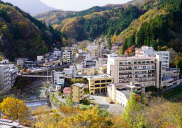 |
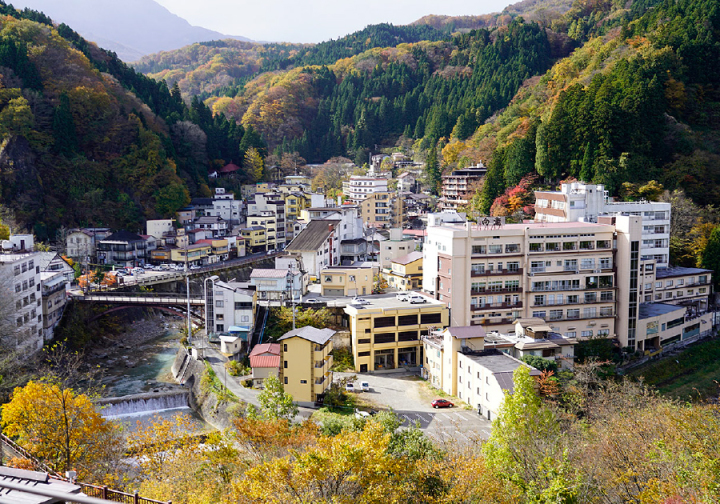
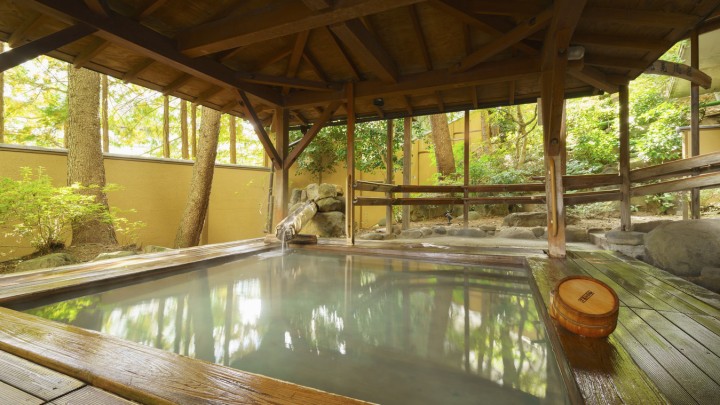
It has a history of over 1,400 years as a hot spring resort that also served
as a post station on the Aizu Kaido road (Tsuchiyu Kaido road) that ran
from Fukushima Castle Town to Aizu. It is now located along National Route
115 (Tsuchiyu Kaido road), the shortest route from the prefectural capital
Fukushima City to the Aizu region. Tsuchiyu Onsen has many hot springs,
and you can enjoy hot springs with more than 10 different types of spring
water. The hot spring area is located at an altitude of about 450 meters
and is surrounded by mountains, and the entire hot spring area is designated
as a national park. The local Tsuchiyu Kokeshi dolls are also a representative
local toy of Fukushima City, and it is also known as the production area
of "Japan's Three Great Kokeshi Dolls"
 (external link) (external link) |
FUKUSHIMA(City/Cap) |
 |
|
|
|
|
| Prefectural Museum |
an Art Museum in Fukushima |
73C005 |
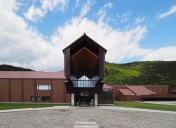 |
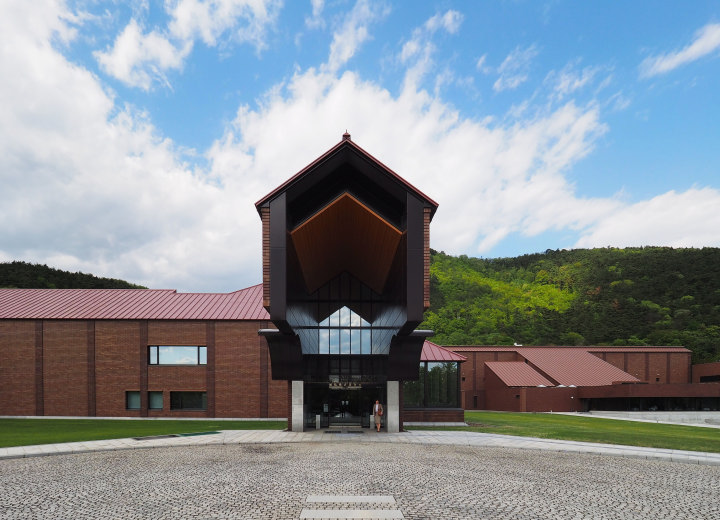
Fukushima Prefectual Museum of Art is located at the foot of Mt. Shinobu (a symbol mountain of Fukushima City), alongside the Fukushima Prefectural Library. It opened in 1984 on the former site of the Campus of the Economics of Fukushima University.
It is close to Fukushima Station and has good transport access, yet is
in a quiet, tranquil environment. It houses over 1,600 works of art, including
paintings, prints, sculptures, and crafts, and is characterized by its
collection of 20th century American figurative paintings, as well as the
work of printmaker Saito Kiyoshi, painter Sekine Shoji. and so on.
(external link) |
FUKUSHIMA(City/Cap) |
|
|
|
|
|
| JODODAIRA Plateau |
a marshland surrounded by mountains |
|
73N006 |
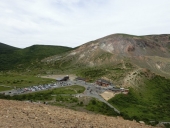 |
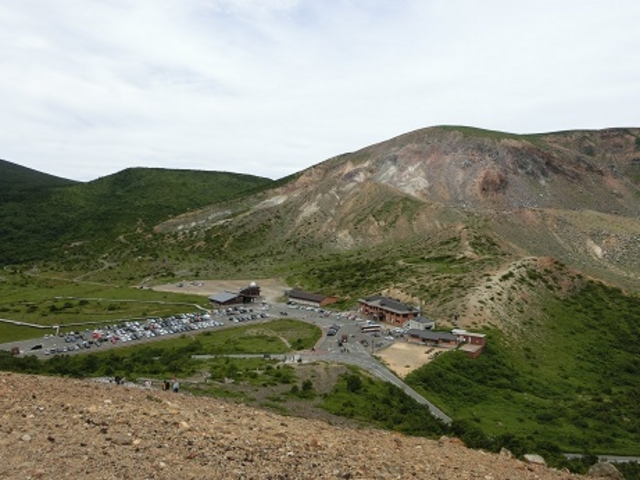
ILocated at an altitude of 1600m, the area is surrounded by volcanic desert and virgin coniferous forests, mainly Abies mariesii. Many alpine plants, coniferous forests, and marshes are also scattered here and there. A visitor center, rest areas, and nature trails have been established, and various levels of activities are available, from an hour's hike starting from here to full-scale trekking. When the mountain tourist road named Bandai-Azuma Skyline opens from April to mid-November, you can easily enjoy the subalpine nature. It is not only a great place for daytime activities, but also a great place for stargazing. In 1993, the Jododaira Astronomical Observatory, the highest public observatory in Japan, was established
(external link) |
FUKUSHIMA(City/Cap) |
|
|
|
|
|
| NUNOBIKI Plateau |
Wind Plateau |
73N011 |
 |
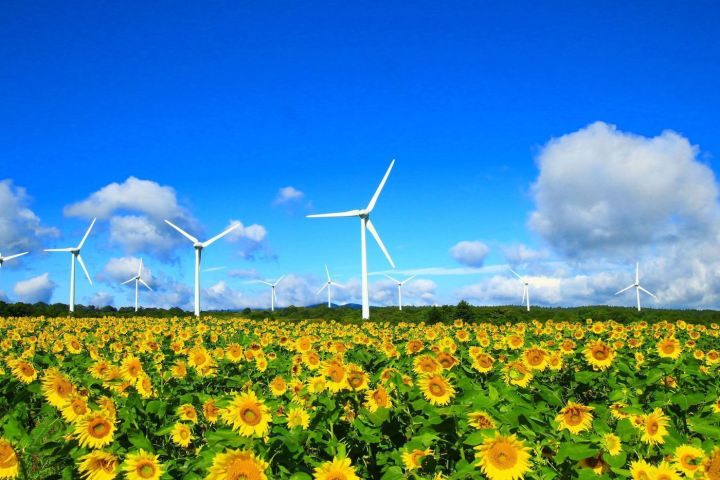
The plateau spreads across Mt. Aizu Nunobiki on the south side of Lake
Inawashiro. At an altitude of about 1,000 meters, it is a plateau with
excellent views, from which you can see Mt. Bandai and Lake Inawashiro.
There are 33 windmills lined up on the plateau, and you can see the spectacular
sight of them slowly rotating in the wind blowing in from Mt. Bandai and
Lake Inawashiro. For this reason, it is called the "Wind Plateau."
In spring, rape blossoms bloom, in summer, sunflowers, and in autumn, cosmos
flowers spread all over the place. The view of Lake Inawashiro, with Mt.
Bandai reflected on the lake surface as seen from Nunobiki Plateau is wonderful.
In winter, the road is closed due to deep snow.
(external link) |
KORIYAMA(City) |
|
|
|
|
|
| CHRYSANTHEMUM Doll |
top three chrysanthemum dolls in Japan |
73C016 |
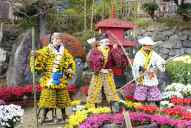 |
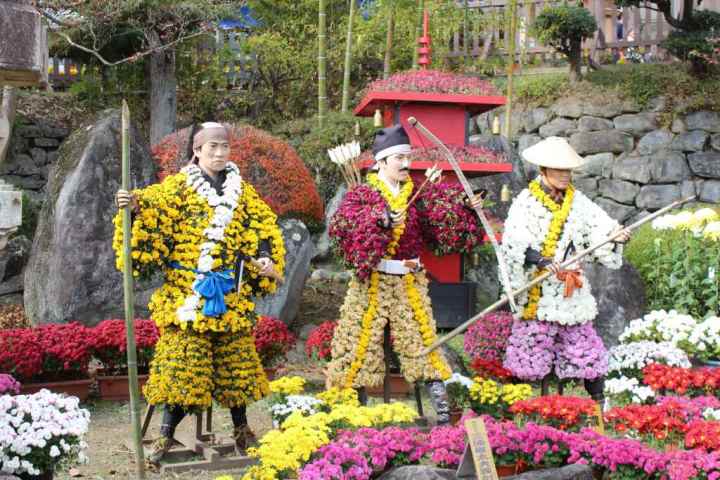
Every year from October to November, a chrysanthemum doll exhibition is
held at Kasumigajo Park in Nihonmatsu Castle. Counted among the top three
chrysanthemum dolls in Japan, the entire venue is filled with lustrous
chrysanthemum flowers and colorful autumn leaves. Nihonmatsu has long been
home to many chrysanthemum enthusiasts, and chrysanthemum dolls have been
displayed around the town since the early 20th century. Since 1955, the
Chrysanthemum Festival has been held in Kasumigajo Park as a spectacular
event. Each doll is made using more than 50 chrysanthemums, and the chrysanthemums
are dressed in a three-dimensional way, making it a sight to behold. The
dolls are dressed-upchanged four to five times during the exhibition, so
you can get a close-up look at the skilled craftsmanship.
(external link) |
NIHONMATSU(City) |
|
|
|
|
|
| DAKE Hot Spring |
already known in Kyoto in the 9th century |
73C018 |
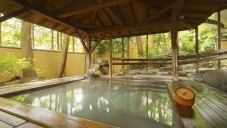 |
This hot spring has a long history, having already been known in Kyoto
in the 9th century. Its long history has seen it encounter landslides and
fires, and it has relocated and changed its appearance each time. The name
of the hot spring has also changed many times before it became the current
"Dake". Eventually, various inns and shops joined together, and
it steadily developed as a modern hot spring. It is said to be effective
for gastrointestinal disorders and neuralgia. The water is usually clear,
but once a week it turns milky white, known as "Milky Day", and
is one of the famous attractions of Dake Onsen. Milky Day usually falls
on every Monday, but the date can be delayed due to bad weather or other
circumstances.
(external link) |
NIHONMATSU(City) |
|
|
|
|
|
| SHIRAKAWA Daruma Doll |
traditional Japanese dol |
73S020 |
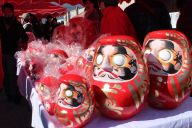 |
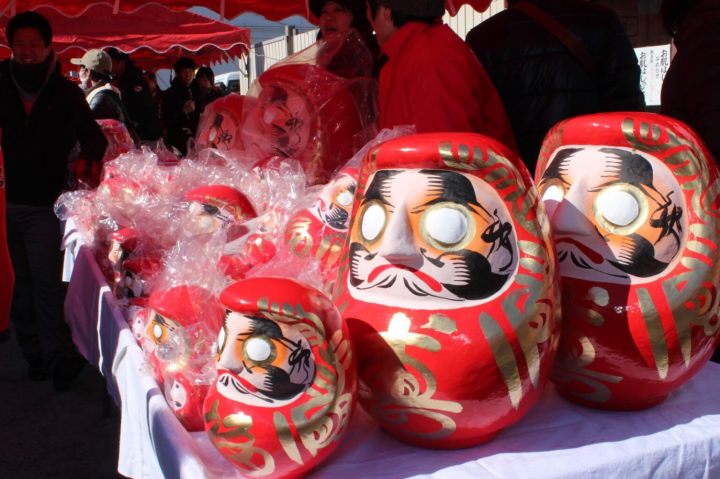
Daruma dolls are traditional Japanese dolls that have been worshipped in Japan for centuries as symbols of good luck, success, and perseverance. The basic color of Daruma dolls is red, but in recent years, modern and cute designs have also appeared. Shirakawa Daruma dolls are characterized by their long beards. There are red Daruma dolls that are said to ward off evil and ensure safety in the home, and white Daruma dolls that are said to bring good luck. Most Daruma dolls are "eyeless Daruma dolls," in which one eye (the right one as you face it) is filled in when the doll is purchased, and the other eye is filled in when a wish is granted. The Shirakawa Daruma Market, the largest city festival in the region, is held every year on February 11th.
(external link) |
SHIRAKAWA(City) |
 |
|
|
|
|
| FUKUSHIMA Airport |
Holy land of Ultraman |
73O025 |
 |
The airport was opened in 1993 after being excavated from the hills of
the Abukuma Mountains. After the installation of parallel taxiways and
other measures, it was fully opened to the public in 2000. As Sukagawa
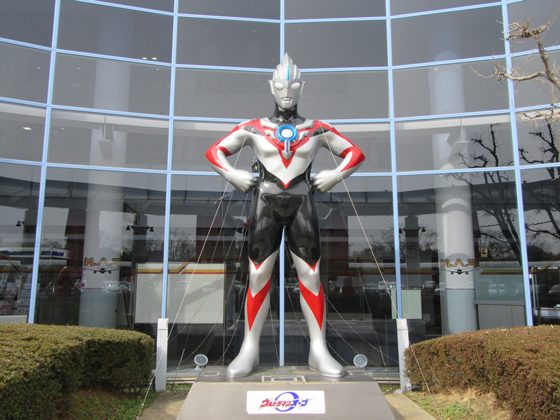
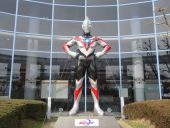
City is the hometown of Eiji Tsuburaya, the creator of Ultraman, the airport
is decorated with an Ultraman theme inside and outside the airport, including
statues of characters from the Ultra Series. There are also a variety of
events at the airport. Nearby is Fukushima Airport Park, which has a theme
of people, nature, and science, and is a place of relaxation for the prefecture's
residents. There is free parking for 2,300 cars.
(external link) |
SUKAGAWA(City)
TAMAGAWA(Village) |
|
|
|
|
|
| MUSHI MUSHI Land |
insect museum |
73C028 |
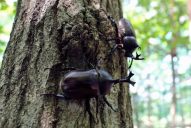 |
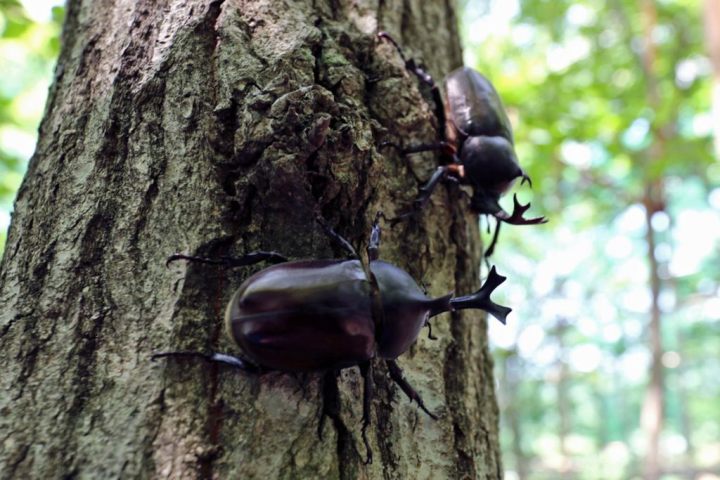
This insect theme park (insect museum) opened in 1991. It touts itself as "only insect paradise in Japan." Tamura City is a town with a thriving tobacco leaf production industry, and the idea started when many rhinoceros beetle larvae were discovered growing in the leaf mold used as fertilizer for tobacco leaves. The resident staff will not only carefully explain everything from how to raise insects to their ecology, but also provide time to interact directly with the insects on display and the rhinoceros beetles that are kept free-roaming in a natural environment. Barbecue facilities and accommodation are also available.
(external link) |
TAMURA(City) |
|
|
|
|
|
| ONINGYOUSAMA |
Mr., & Ms. Doll(large god) |
73C029 |
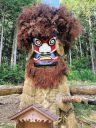 |
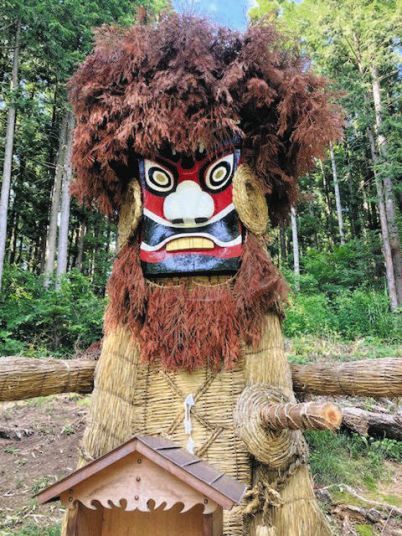
A god of protection against evil. A large god made of straw is enshrined
here as a talisman. It is said that this was erected as a talisman to prevent
evil spirits from entering the villages after the spread of a deadly disease
during the Edo period. There are doll Jizo statues all over the Tohoku
region, but this doll's unique feature is that it is this too large. It
is about 4 meters tall, holds a naginata and a sword, and spreads its arms
as if blocking the way. Its face has the expression of a great demon, glaring
to stop anything bad from entering from outside. There are three dolls
in the city, each with a different expression. The clothes of the dolls
are changed every April.
(external link) |
TAMURA(City) |
|
|
|
|
|
| KAWAMATA Organdy Silk |
the thinnest silk fabric in the world |
73S030 |
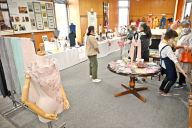 |
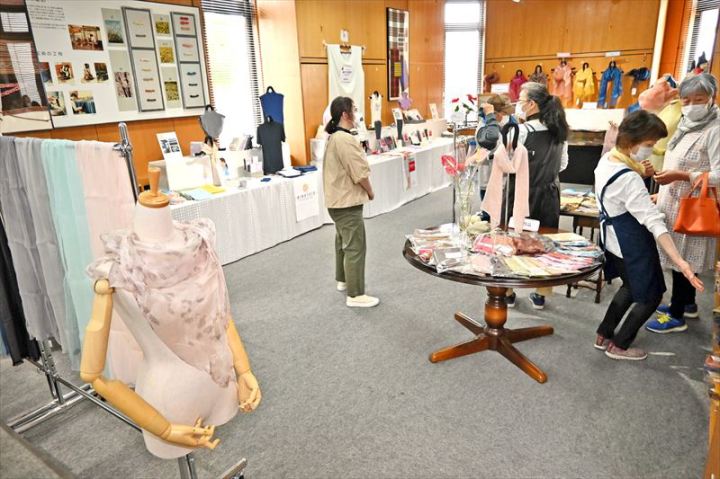
The origin of Kawamata silk is said to be 1,300 years ago, when the emperor's wife, searching for her missing son, arrived here in Kawamata, planted mulberry trees, started raising silkworms, and taught him how to weave. In the Meiji era, Kawamata Habutae (a type of silk fabric) suddenly became all the rage as mass production through mechanization was successfully achieved. After the world war 2, Kawamata initially struggled due to the effects of chemical fibers and cheap Asian products, but eventually high-end designers around the world recognized the high quality of Kawamata silk, and now Kawamata silk is attracting attention around the world. "Fairy Feather", the world's thinnest and most flexible silk fabric, was developed in this town and is so light that it feels like wearing a garment made of air. What's more, it is mass-produced by machine.
(external link) |
KAWAMATA(Town) |
|
|
|
|
|
| KAWAMATA Shamo (gamecook) |
one of luxury food ingredient nowadays |
73G031 |
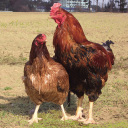 |
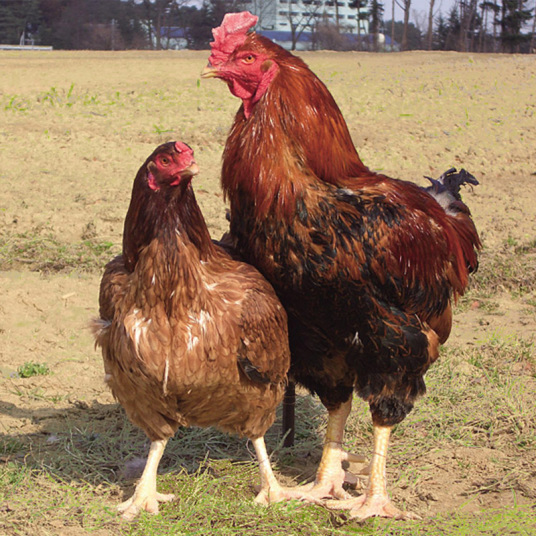
During the Edo period, Kawamata town prospered through silk textile production and produced many "silk millionaires," for whom cockfighting was a popular form of entertainment. This tradition subsequently disappeared, but as part of an effort to revitalize the town, inspired by the relationship between silk and Shamo (Gamecock), research into edible Shamo meat began in 1983, and after much trial and error, the modern-day "Kawamata Shamo" was created. The breeding density is set at five to six birds per square meter so that the birds can move around freely, and the shamo meat, which is raised in a free-range environment with little stress, has an inherent chicken flavor that develops the more you chew it. It is now recognized as a luxury food ingredient.
(external link) |
KAWAMATA(Town) |
|
|
|
|
|
|
|
|
|
|
|
|
|
| |
|
|
|
| |
|
|
|
| other contents |
|
|
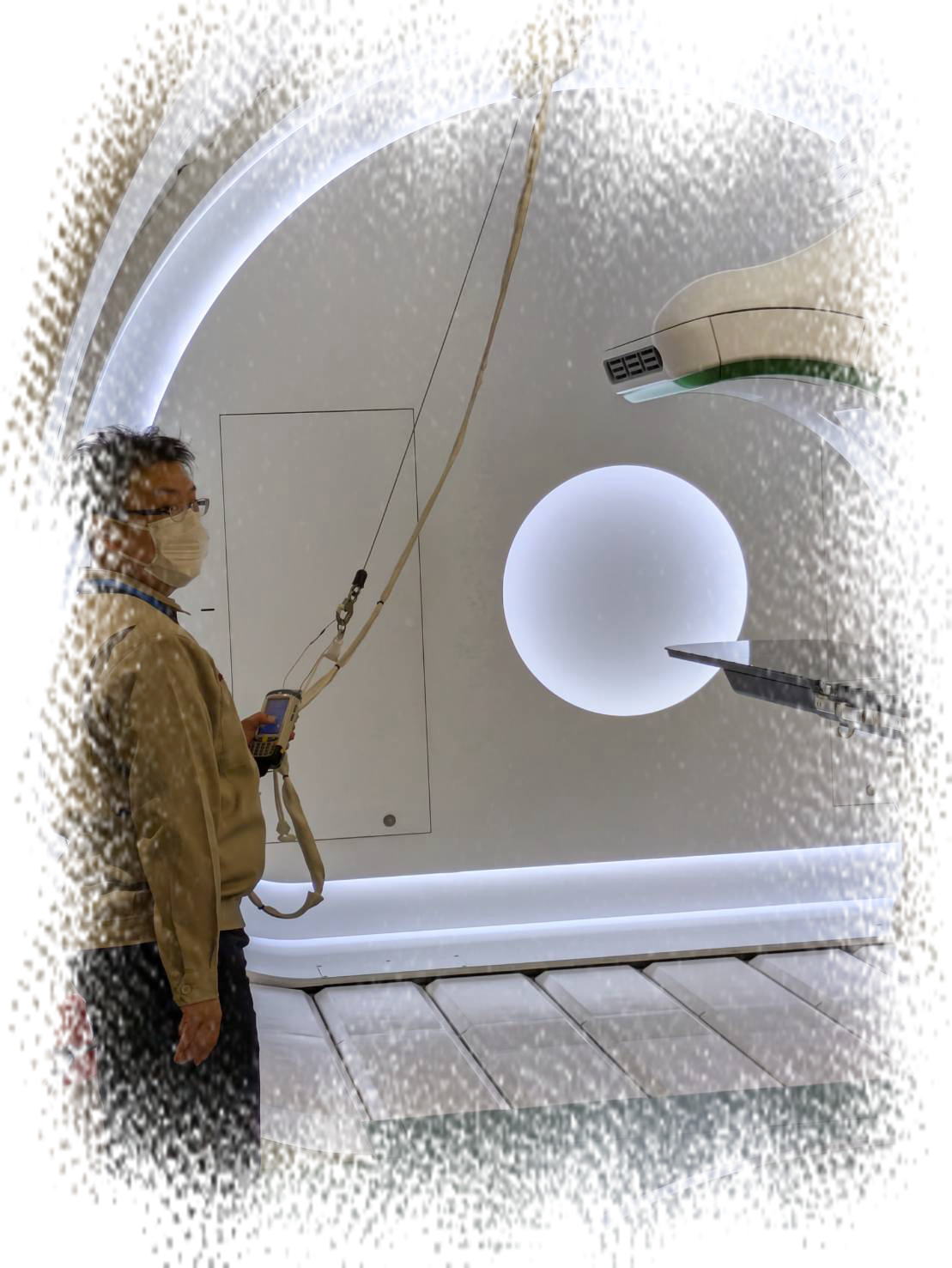
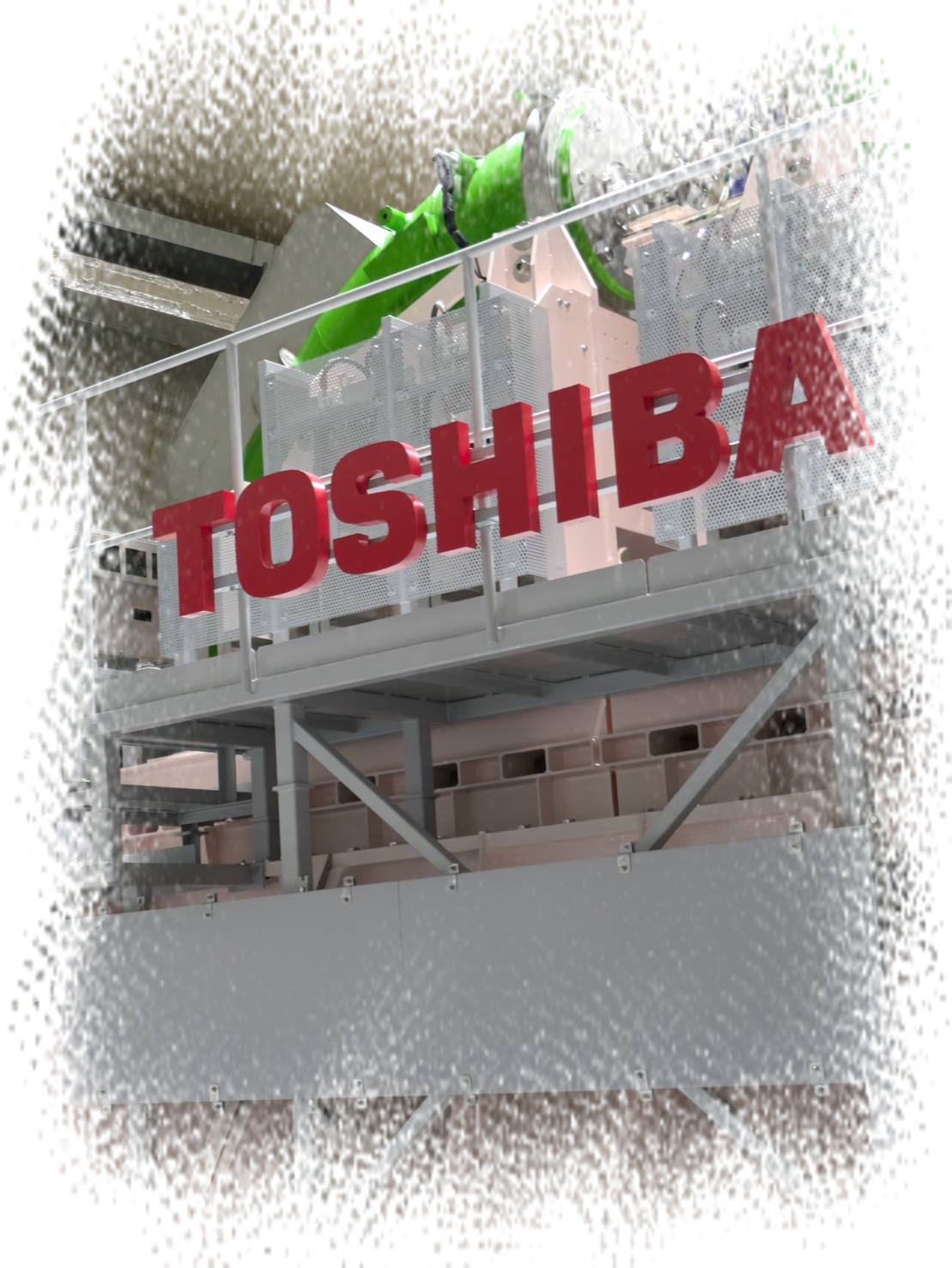
Medical Tourism
|
|
|
| Japan - the country of advanced medical care! |
 |
| Cancer can be cured without surgery |
|
|
|
Properties' Research-Purchase Tourism
|
|
|
| Japan - stable politics and public safety! |
|
| Perfect for living or investing |
|
|
| |
|
| |
|
ACCOMMODATION - HOTEL, RYOKAN (Traditional Japanese Inn)
|
|
|
|
|
| |
|
| |
| |
|
|
Trips abroad for Japanese Travelers
|
|
|
| a custom-made trip is the one you won't regret |
|
|
|
|
shopping @ TRAVELMART
|
|
|
| You can purchase Japanese masterpieces |
|
|
|
| |
|
|
| Discover something in Japan! |
| TRAVELMART® is not only a travel business, but also can offer clients valuable
experiences in Japan by its wealthy network and know-how, as ... |
| Medical care, Real estate (purchase, investment, management), Purchase
Japaese masterpieces, Relocation to Japan and Establishing a company or
shop, others |
|
| Copyright... IMA Group Co., Ltd. (Wholesaler and Travel Agency in Japan
since 1985) |
| <about link> these web pages are always Link Free. You can feel free to create link to every pages.
|
|
|