| Desination |
Outline |
City/Town/Village |
# / Map |
|
|
|
|
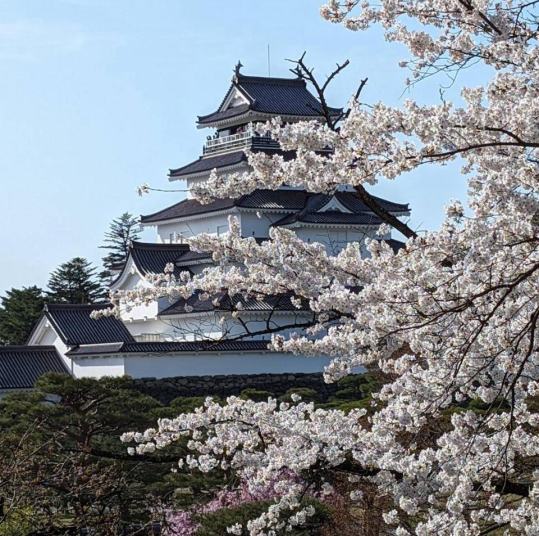
| TSURUGAJO CASTLE |
a symbol of SAMURAI city built in 1384 |
71N001 |
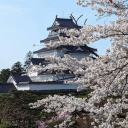 |
The recommended period for cherry blossom viewing is usually around April.
 |
Aizu Wakamatsu(City) |
 |
|
|
|
|
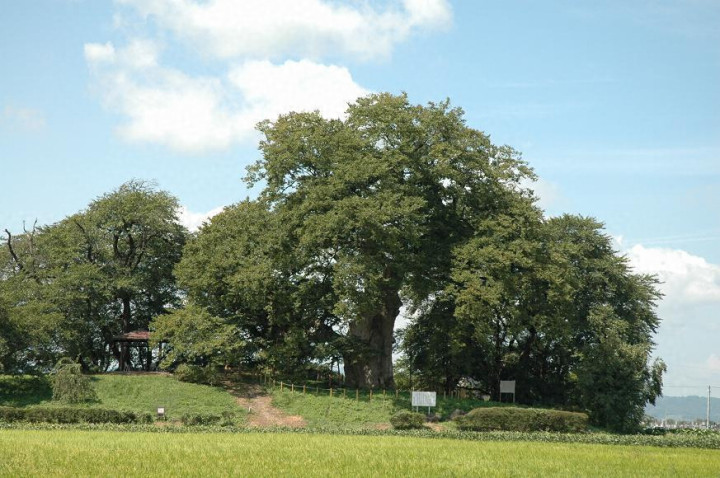
| TAKASE no TAIBOKU |
a large Zelkova tree that is about 500 years old |
71N002 |
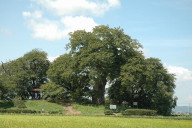 |
This is the site where a castle was planned to be built about 500 years ago.
(external link) |
Aizu Wakamatsu(City) |
|
|
|
|
|
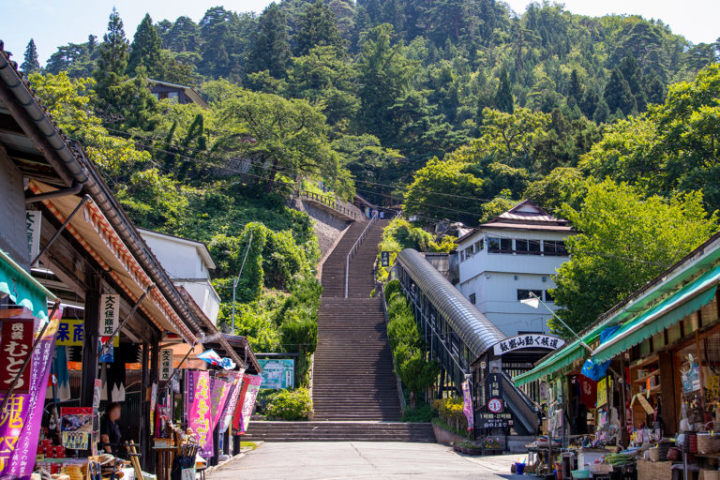
| Mt. IIMORI |
a mountain with sad story |
71C009 |
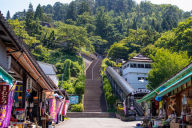 |
The summit is well known as the place where 19 young soldiers, known as
the Byakkotai, committed suicide during the Aizu War. There are two ways
to get to the summit: on foot or by taking the paid escalator (cheap).
(external link) |
Aizu Wakamatsu(City) |
|
|
|
|
|
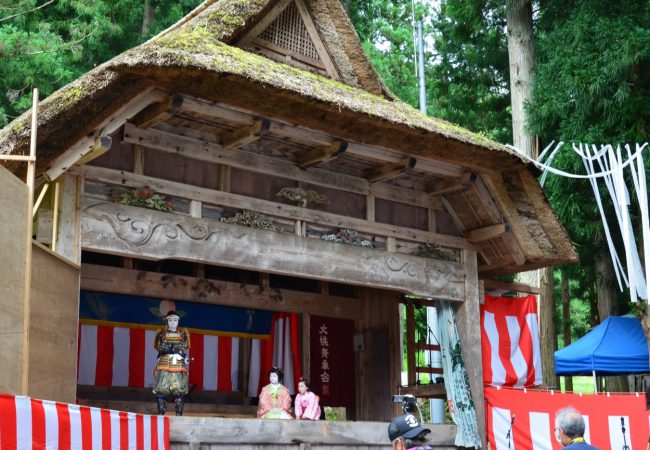
| Rural KABUKI in OKU AIZU |
one of the traditional Japanese performing art |
71C012 |
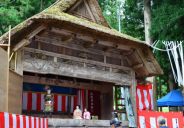 |
In the inner region of Aizu called Oku-Aizu, farmers have been performing kabuki since the Edo period. Kabuki at the Hinoemata village held around May and August or September is very famous.Kabuki has been designated an intangible cultural heritage by UNESCO.
(external link) |
MINAMI AIZU(Town),
HINOEMATA(Village) |
|
|
|
|
|
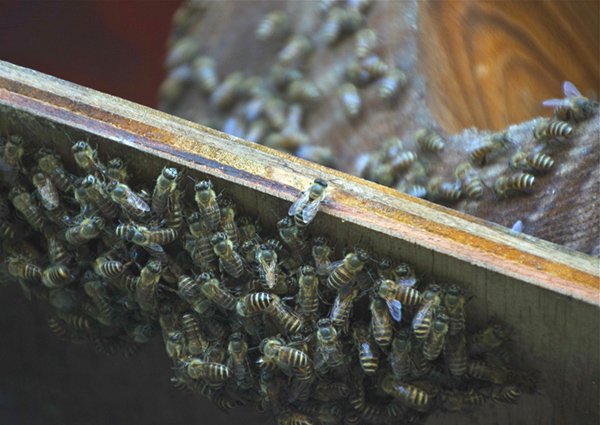
| NIHON MITSUBACHI |
traditional Japanese beekeeping using hives |
71C015 |
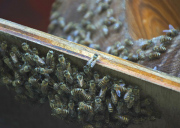 |
The nectar of the Japanese honeybee called NIHON MITSUBACHI, a species
native to Japan, is a multi-flower nectar blended with nectar from various
flowers, and is said to have a richer flavor than the nectar of Western
honeybees.
(external link) |
MINAMI AIZU County |
|
|
|
|
|
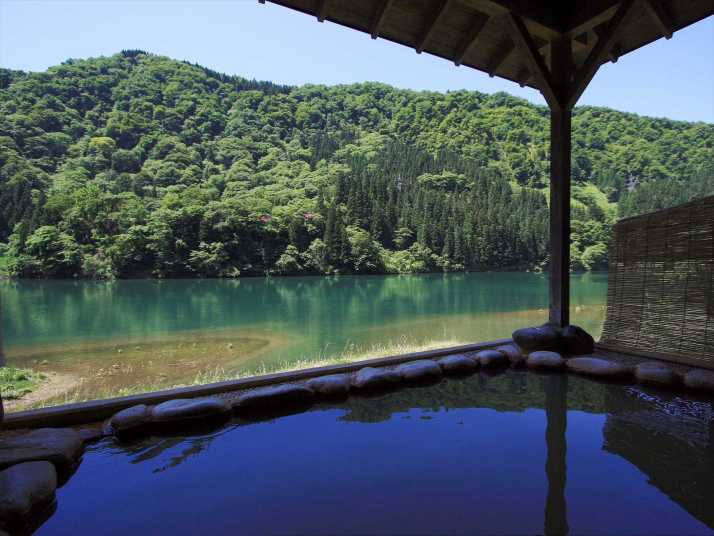
| HIGAERI Onsen |
also can enjoy the open-air bath |
71C016 |
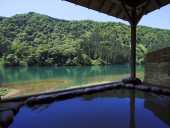 |
A lot of day trip hot springs in this region have a history of over 1,000 years and there are many natural medicinal with 100 percent natural spring water.
The baths are separated into men's and women's areas, and bathing clothes
such as swimsuits are not permitted. Also, due to ancient customs, people
with tattoos may be refused entry to the baths, so it is necessary to check
beforehand in that case. |
AIZU area |
|
|
|
|
|
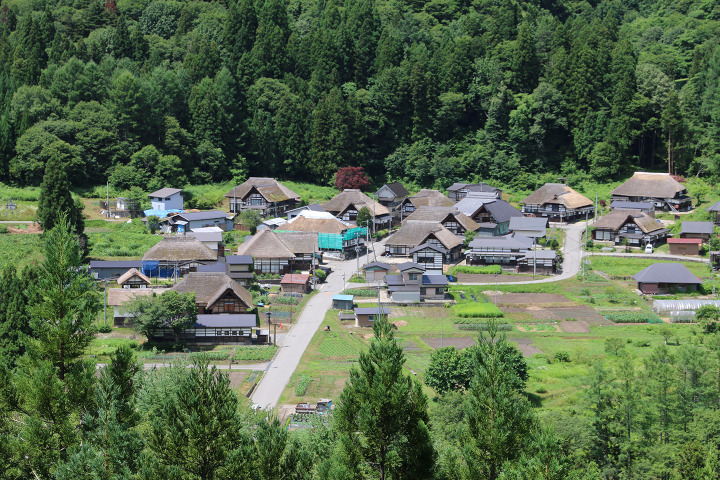
| MAEZAWA Hamlet |
L-Shaped Farmhouses |
71C017 |
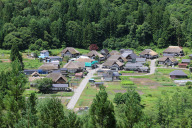 |
Maezawa Hamlet was designated as an Important Preservation District for Groups of Traditional Buildings by the national government in 2011.
The distinctive features of the buildings are the L-shaped curved houses with thatched roofs. As the village is an area with heavy snowfall, the Magariya houses (L-shaped curved houses) are designed so that people can live together with their precious cows and horses, who are indispensable to their lives. The protruding part in the front is for the cows and horses, while the building in the back is the living space for the people. The gables are highly designed, with skylights, wooden beams and crossbeams, carvings on the front lining, and fox lattice.
The distinctive feature of the houses is that people still live in them
today, retaining the appearance of the time. BTW, don't forget that here
is a bear habitat!
(external link) |
MINAMI AIZU(Town) |
|
|
|
|
|
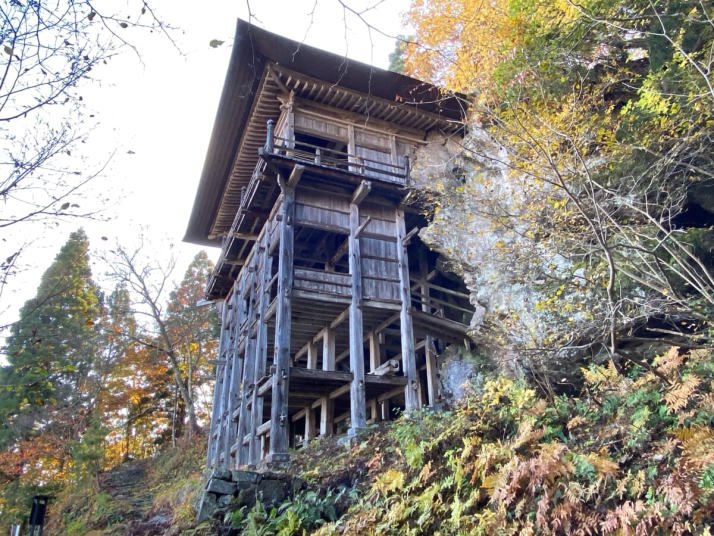
| SAKUDARI KANNONDO |
a hall built on a cliff irenovated in 1358 |
71N018 |
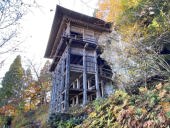 |
A quiet place where few people know. There is a parking lot near the building
(a parking lot at the foot is far away). Admission and parking are both
free. It's possible to get a temple seal at a private house at the foot
of hall (for a fee).
(external link) |
AIZU MISATO(Town) |
 |
|
|
|
|
| TACHIKI KANNON |
called standing tree Kannon |
71C022 |
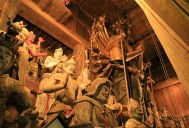 |
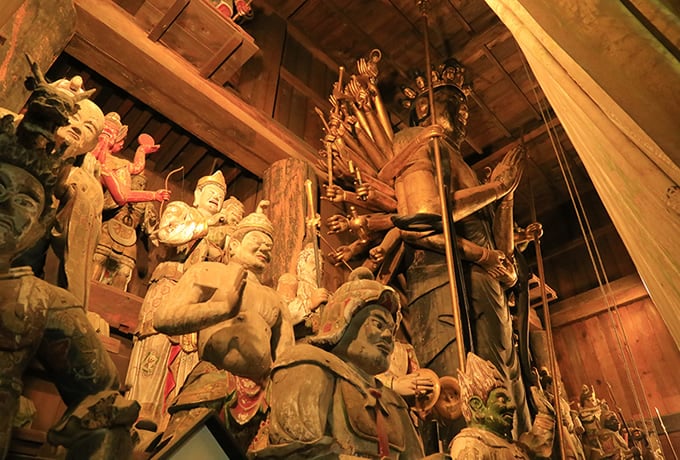
This is one of the three Aizu Korori Kannon and a symbol of Aizu. The origin
of the name Korori Kannon comes from the legend that if you hug the pillar
inside the hall and make a wish while looking at the face of Kannon, any
wish will come true easily. Built over 800 years ago, the interior features
huge columns and magnificent wooden walls, and the main object of worship,
"the Eleven-Headed Thousand-Armed Kannon" is one of the largest
wooden statues in Japan, carved into a large tree with its roots still
attached. Local people affectionately call it "Standing Tree Kannon."
Shoes are not permitted inside the hall, so you must remove shoes before
entering.
(external link) |
AIZU BANGE(Town) |
|
|
|
|
|
| KOKUZOSON Hall |
a majestic temple (Enzoji) overlooking the Tadami River |
71C023 |
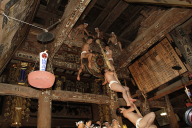 |
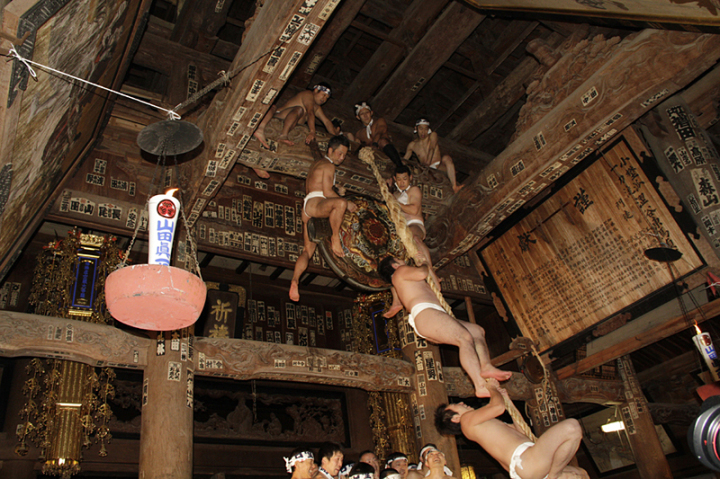
A famous temple built over 1200 years ago. In the grounds, there is a statue of Akabeko (red cow), which is said to bring good luck. The highlight of this temple is the Nanokado Naked Mairi, held every year at 8:30 pm on January 7th. Many men clad in loincloths called FUNDOSHI climb the hemp rope of the hall of Enzoji Temple, aiming for the top. This festival is held to pray for happiness and good health for the year. The public is also welcome to participate.
(external link) |
YANAIZU(Town) |
|
|
|
|
|
| Lake NUMAZAWA Festival |
reenacting the legend of the serpent |
71C024 |
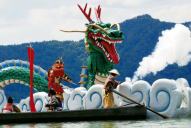 |
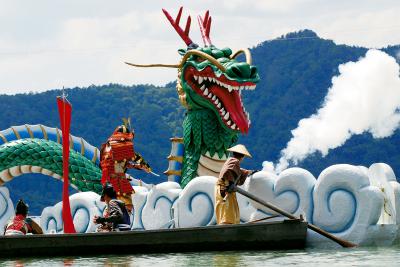
The Numazawa Lake Festival is Kanayama Town's largest festival, held for two days every year on the first Saturday and Sunday of August at Lake Numazawa, a lake surrounded by forest. The "Giant Snake Extermination," a reenactment based on the legend of a giant snake passed down in the Numazawa community, is very impressive. Over the two days, a period picture scroll based on the legend of the extermination of a giant snake that lived in Lake Numazawa more than 800 years ago will be
(external link) |
KANEYAMA(Town) |
|
|
|
|
|
| |
|
|
|
| |
|
|
|
| |
|
|
|