|
 |
|
| |
Essential for your travel needs.
Let's be more moved - turn a trip of sights in Japan into a trip of feeling!
|
|
Culture of the MORIOKA area in IWATE Ken
|
| |
|
|
|
|
TRAVELMART® is a rare presence in Japanese travel market.
That's because it's only a travel agency in Japan that specializes in arranging
travel throughout the Tohoku region in Japan. |
| The TOHOKU region refers to the northeastern part of the main island, Honshu
of Japan. |
| It's the quintessence of Japan for visit Japan travelers... |
| the most attractive place the most scenic place the most mysterious place |
| |
|
|
| |
| |
|
|
|
|
| |
| |
 Recommended items you won't regret in Morioka area, Iwate Ken Recommended items you won't regret in Morioka area, Iwate Ken
|
| Recommended items for the trip will be added sequentially. Please check
back from time to time. |
|
|
|
|
| Destination |
Outline |
City/Town/Village |
# / Map |
|
|
|
|
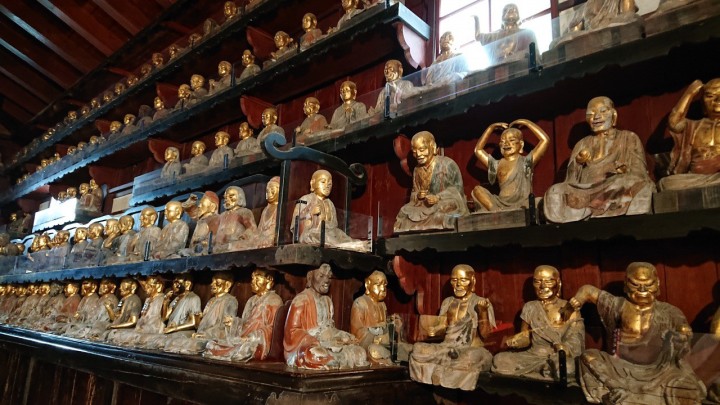
| GOHYAKU (500) RAKAN |
Arhat(Rakan) statue at Hoonji Temple |
32C001 |
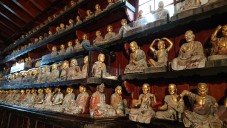 |
The 500 Arhats are housed in the Arhat Hall of Hoon-ji Temple, a historic temple said to have been founded in 1394. The 500 Arhats are 500 saints who gathered from all over after the death of Buddha. As they were originally living people, they have realistic and humorous expressions that are very human. The 500 Arhats housed in the Arhat Hall were created by nine Buddhist sculptors from Kyoto over a period of four years starting from 1731, and are all made of wood and painted with lacquer. It is said that there were 500 statues when they were delivered, but currently 499 remain. Gazing at the Arhats is soothing to the soul.
 (external link) (external link) |
MORIOKA(City/Cap.) |
 |
|
|
|
|
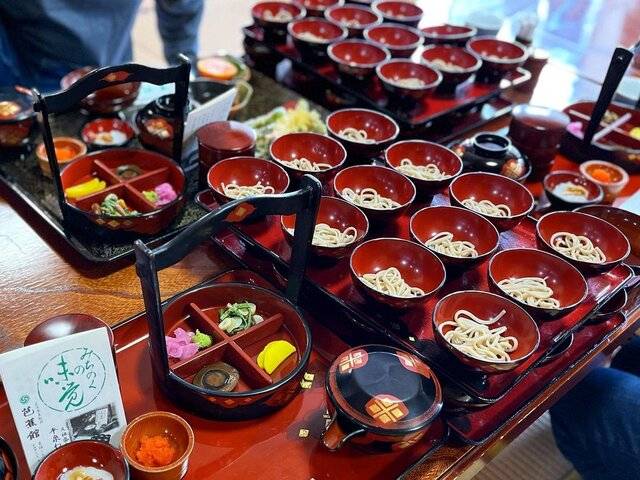
| WANKO SOBA (Noodle) |
soba noodle from tiny bowls |
32C002 |
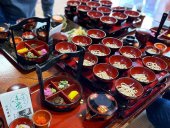 |
"Wanko soba" is a local dish where hot soba noodles are served in small bite-sized "wanko" (bowls) with condiments. The waiter puts bite-sized noodles dipped in hot soba broth into the bowl. The waiter adds more noodles to the empty bowl. This continues until you are full, and the basic style is to "eat all the noodles in the bowl and close the lid without leaving any leftover." The price is not based on a per bowl, but is usually a flat rate for all-you-can-eat. When you enter the restaurant, you are shown to a large room where you are often made to wait for a while until other customers arrive. This is because they place importance on the traditional style of eating in large groups.
(external link) |
MORIOKA(City/Cap.),
HANAMAKI(City), etc |
|
|
|
|
|
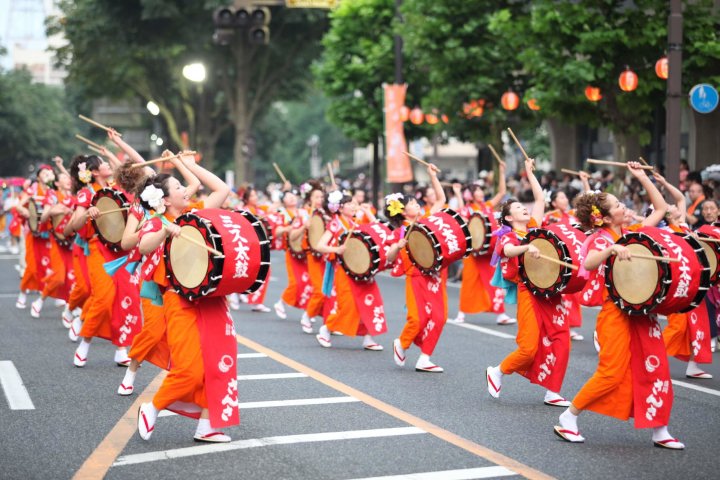
| SANSA Dance Festival |
known as "Japan's No. 1 dram parade" |
32C003 |
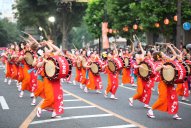 |
This festival takes place every year from August 1st to 4th. The "Sansa Dance", which has been passed down since the feudal era, is said to have originated when the villagers, in joy, danced to the tune of "Sansa, Sansa" after a god had defeated an ogre. The parades by each group generally consist of three parts: Taiko (drums), flutes, and dancing, but due to the large number of Taiko/drums used, it is also known as "Japan's No. 1 Taiko Parade", with well over 10,000 drums. Individuals can also join in the "Circle Dance" that takes place after the parade.
(external link) |
MORIOKA(City/Cap.) |
|
|
|
|
|
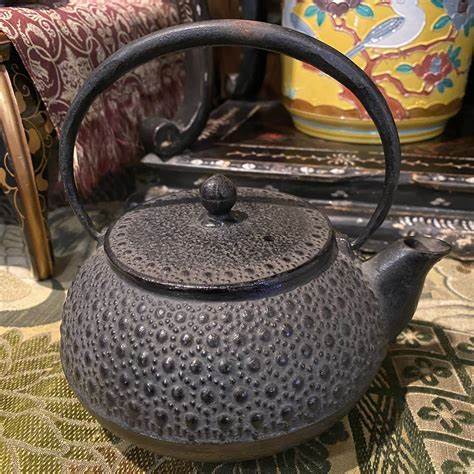
| NANBU ironware |
known for Nambu iron kettles |
32C005 |
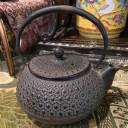 |
Nanbu ironware is said to have begun in the mid-17th century, when the
lord of the Nanbu domain invited a kettle maker from Kyoto to Morioka to
make kettles for tea ceremonies. Since then, the craft has continued to
develop thanks to the availability of high-quality raw materials and the
domain's efforts to protect and nurture the craft, employing many casters
and kettle makers from all over the country, and the products it produced
ranged from tea kettles to everyday items for a wide range of uses. The
famous Nanbu Tetsubin (iron kettle) began in the 18th century when tea
kettles were made smaller and improved, making them easy to use for the
general public. Today, it is loved by many people for its excellent quality,
and has established an unshakable position and brand as a representative
traditional Japanese craft. The iron kettles are popular due to their high
artistic value, and some manufacturers are also focusing on exporting to
foreign countries.
(external link) |
MORIOKA(City/Cap.) |
|
|
|
|
|
| CHAGU CHAGU UMACCO |
Horse(Umacco) appreciation festival |
32C008 |
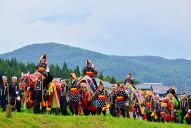 |
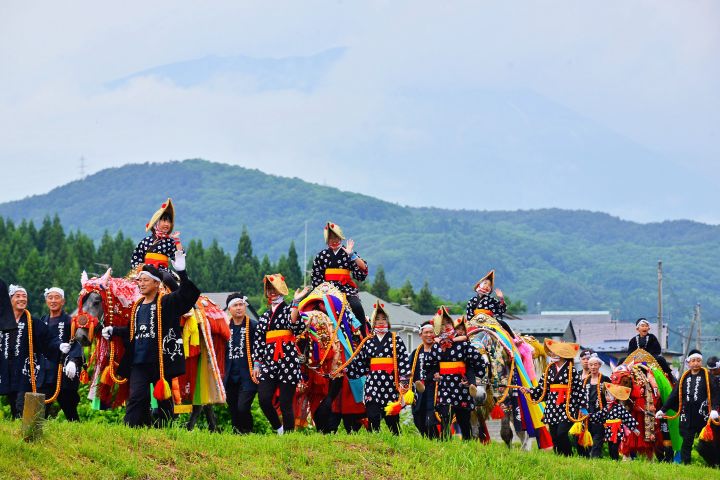
This festival is held every year on the second Saturday of June. Around
100 horses dressed in colorful costumes march 15 kilometers from here to
Morioka City, to the sound of bells ringing. The name "Chagu Chagu"
comes from the sound that the decorative bells attached to the horses make
as they walk, which sounds like "chagu, chugu." It is said that
each horse has more than 700 bells. The festival originated as a festival
to give thanks for the work of horses, which, along with cows, are essential
livestock for farming. This area is famous for its horse breeding, and
people have lived side by side with horses since ancient times. The roots
of this festival lie in pilgrimages to shrines to soothe their horses that
are exhausted from preparing for rice planting, and to pray for good health.
The festival was born from the farmers' cherishing of their beloved horses.
The Chagu Chagu Umako Toy" is a folk craft item that is individually
handmade in honor of this festival. It is a popular lucky charm and suitabl
for a great gift.
(external link) |
TAKIZAWA(City) |
|
|
|
|
|
| KOIWAI Farm |
the largest private comprehensive farm in Japan |
32N009 |
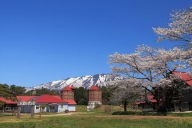 |
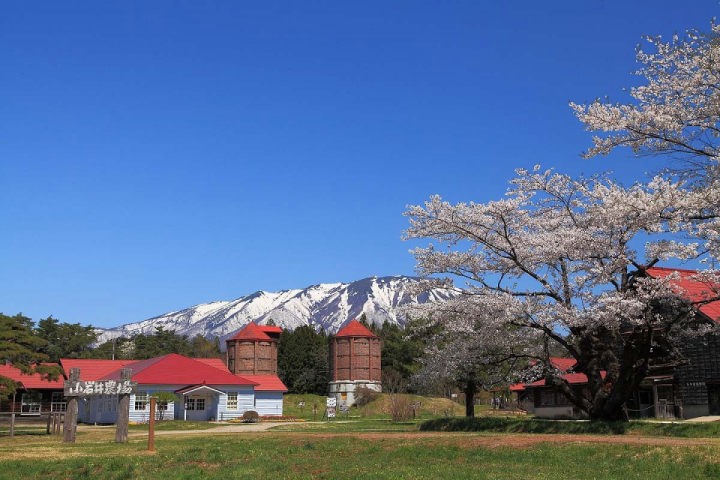
The largest privately-run comprehensive farm in Japan. It spreads across
a magnificent expanse of land overlooking Mt. Iwate. The name "Koiwai"
is an abbreviation of the initials of the farm owner, investor, and guarantor.
Dairy farming has been Koiwai Farm's core industry since 1901. The Makibaen
farm (for a fee), which is open to the public, offers a variety of attractions,
including horse riding, archery, trampolines, and butter-making. They also
offer rich soft-serve ice cream, cheeses that can only be purchased here.
You can also take part in a guided tour to see the closed forest area.
There are 21 farm facilities that have been designated as Important Cultural
Properties by the national government.
(external link) |
SHIZUKUISHI(Town) |
|
|
|
|
|
| OGAL Project |
rural revitalization project |
32N010 |
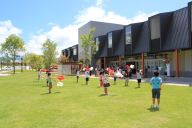 |
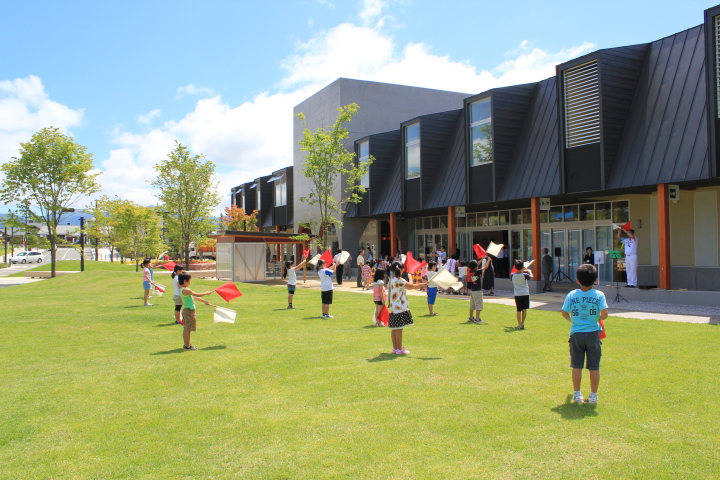
A public-private partnership (PPP) urban development project that began
in 2009 and is centered on the vast town-owned land in front of the station.
Ogal Plaza, the core facility of the project, is a public-private complex
consisting of Shiwa Town's Information Exchange Center (including a library),
privately run direct sales stores, cafes, Izakaya restaurant-bars , clinics,
cram schools, and so on.. The Ogal Project has attracted attention from
all over the country, and more than 1,000,000 people a year visit this
town of about 33,000 people. There is a grassy square in the center and
also a hotel.
(external link) |
SHIWA(Town) |
|
|
|
|
|
|
|
|
|
|
|
|
|
| |
|
|
|
| |
|
|
|
| Discover something in Japan! |
| TRAVELMART® is not only a travel business, but also can offer clients valuable
experiences in Japan by its wealthy network and know-how, as ... |
| Medical care, Real estate (purchase, investment, management), Purchase
Japaese masterpieces, Relocation to Japan and Establishing a company or
shop, others |
|
| Copyright... IMA Group Co., Ltd. (Wholesaler and Travel Agency in Japan
since 1985) |
| <about link> these web pages are always Link Free. You can feel free to create link to every pages.
|
|
|