|
 |
 |
Culture of the SOUTHERN area in IWATE Ken
"Ken" in Japanese means "Prefecture" |
Let's more moved - turn a trip of sight in Japan into a trip of FEELING!
|
|
| |
|
|
|
|
TRAVELMART® is a rare presence in Japanese travel market.
That's because it's only a travel agency in Japan that specializes in arranging
travel throughout the Tohoku region in Japan. |
| The TOHOKU region refers to the northeastern part of the main island, Honshu
of Japan. |
| It's the quintessence of Japan for visit Japan travelers... |
| the most attractive place the most scenic place the most mysterious place |
| |
|
|
|
|
| High-quality service Free travel consultation |
 Recommended items you won't regret in Southern area, Iwate Ken Recommended items you won't regret in Southern area, Iwate Ken
|
Recommended items for the trip will be added sequentially. Please check
back from time to time.
|
|
| Desination |
Outline |
City/Town/Village |
# / Map |
|
|
|
|
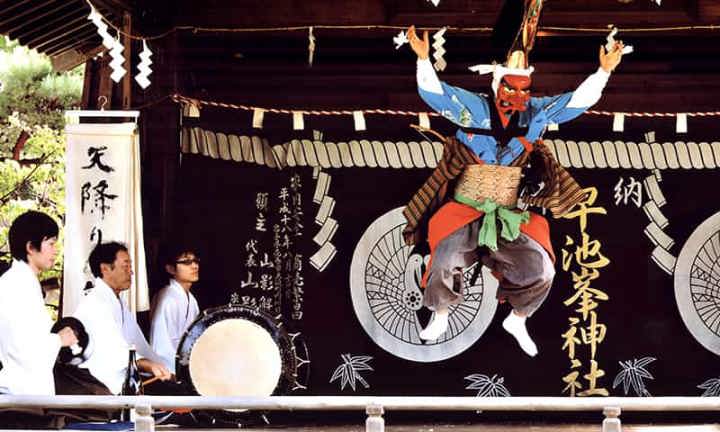
| HAYACHINE KAGURA |
Dance deicated to God |
34C001 |
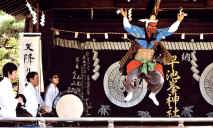 |
Embracing the sacred mountain of Mt. Hayachine, the traditional dance "Hayachine
Kagura" has been handed down through generations in the region. Hayachine
Kagura is the collective name for two kagura troupes, Otsugunai and Take.
In 1976, it was designated as the first Important Intangible Folk Cultural
Property, and in 2009, it was registered as an Intangible Cultural Heritage
by UNESCO, and is recognized worldwide as a common heritage of mankind.
The Otsugunai and Take districts are about 12 kilometers apart
 (external link) (external link) |
HANAMAKI(City) |
 |
|
|
|
|
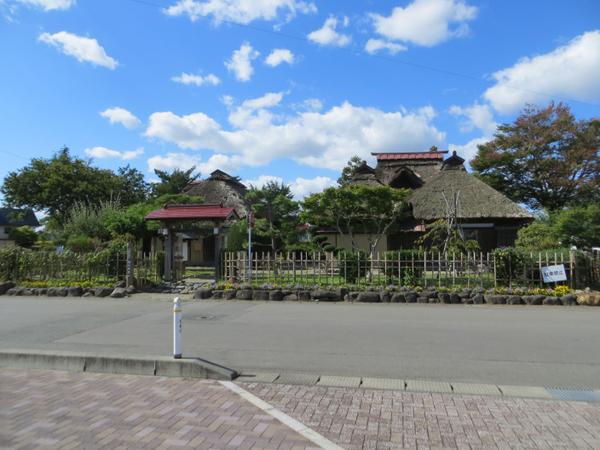
| Residences of DOSHIN |
currently, two houses remain |
34C002 |
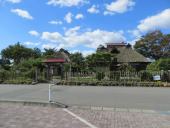 |
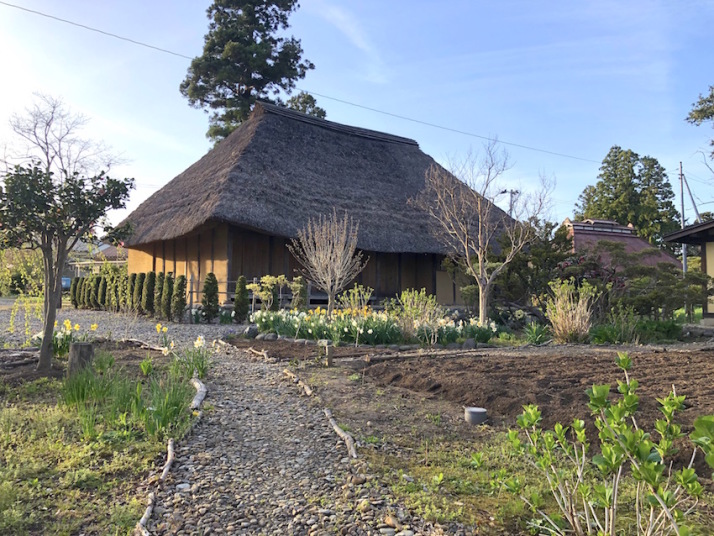
The "Doshin(low-ranking SAMURAI) houses" were built in the late Edo period and were the residences of doshin (low-ranking samurai). They are highly valued as doshin residences from the feudal era and have been designated as cultural assets of the city. They originally lived near Hanamaki Castle, but in 1680, 30 of them moved to the current area. Initially, 15 buildings were located on the east side of the road and 15 on the west side, and all had the same layout. Naturally, this layout was too narrow, so the houses were expanded over the years and are thought to have taken on their current form. Currently, two of the houses have been relocated and are preserved. One of the buildings has almost no signs of renovation and is considered a valuable example of a doshin house. Entry to the premises is prohibited from December to March.
(external link) |
HANAMAKI(City) |
|
|
|
|
|
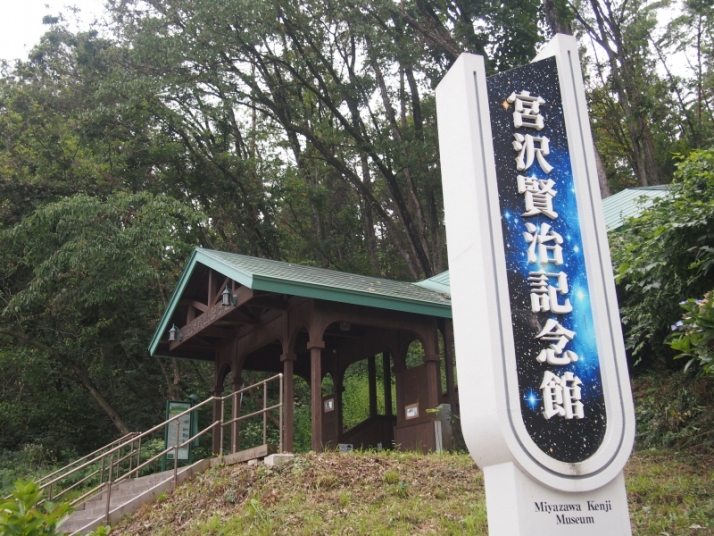
| MIYAZAWA KENJI Museum |
a poet and fairy tale writer |
34C003 |
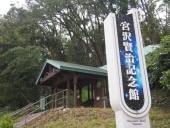 |
The museum exhibits items such as favorite items, manuscripts, videos,
slides, and books related to the late poet and fairy tale writer Kenji
Miyazawa (1896-1933), who was born in Hanamaki and is known for his works
such as "GINGA TETSUDO no YORU (The Night On The Milky Way Train)."
He created works based on his beliefs and lived his life, and is known
for seeing "Ihatov", a fictional utopia that appears in his works,
as a motif of his hometown. The museum also has a souvenir shop and a cafe
space. In addition, in the "Polan Square" located on the south
side, there is a flower bed that has been reproduced based on the design
documents left behind by Kenji Miyazawa.
(external link) |
HANAMAKI(City) |
|
|
|
|
|
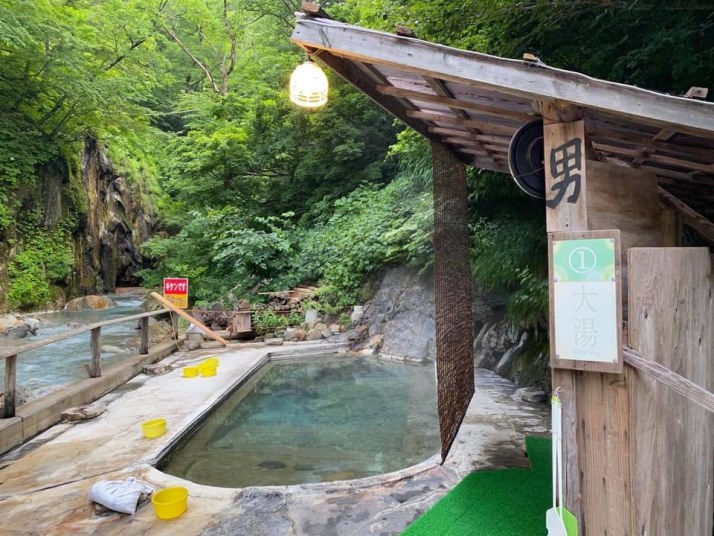
| GETO Hot Spring |
hidden hot spring |
34N007 |
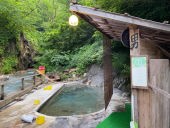 |
It is a hidden and small hot spring located in a valley on the mountainside, an hour's drive from the city center. Some say it was discovered in the 14th century, others say it was discovered in 856, so it is a hot spring with a long history. It is popular for its open-air baths that gush out from the river. Almost all of the dozen or so springs are artesian, and the water quality varies slightly. Day bathing is possible, but there are times when it is mixed bathing and for women only. It is located further back than Geto highland Ski Resort, known for its high-quality powder snow, and is only open from spring to autumn because it is closed in winter due to snow. Upstream of the hot spring is Tengu no Iwa, the largest travertine in Japan.
(external link) |
KITAKAMI(City) |
|
|
|
|
|
| KITAKAMI-MICHINOKU Festival |
performing arts festival |
34C008 |
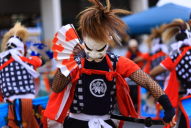 |
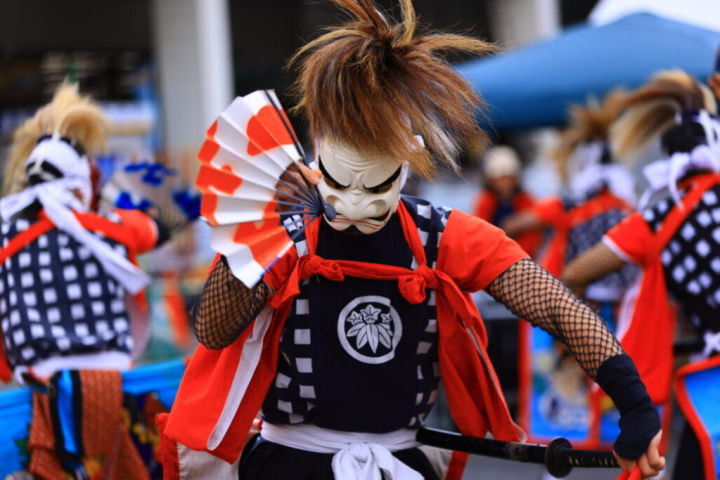
The Kitakami-Michinoku (Tohoku Region) Performing Arts Festival is held
for three days from the first Saturday in August every year. More than
100 groups perform traditional performing arts, including the local Onikenbai
(a brave dance performed wearing menacing demon masks). The highlight of
the festival is the "Onikenbai Daigunbu", a spectacular dance
performed on the second night of the festival, in which more than 100 dancers
dance simultaneously in front of a bonfire. The final day of the festival
is traditional "Torokko (lantern) floating" and a fireworks display.
The festival features rare folk performing arts that are unparalleled in
both quality and scale. It is sometimes considered one of the "Six
Great Tohoku Festivals"
(external link) |
KITAKAMI(City) |
|
|
|
|
|
| OSHU City Cattle Museum |
only museum in Japan specializes in cattle |
34C009 |
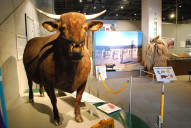 |
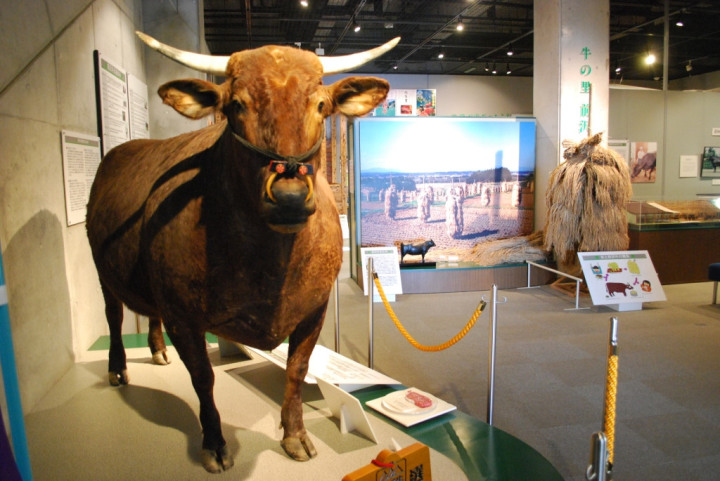
Opened in 1995 in Oshu City, famous for its Maesawa beef cattle, this is
the only museum in Japan that specializes in cattle (and is rare worldwide).
The museum's theme is "exploring the coexistence of cattle and humans,
and learning about life, nature, and humans." The museum conducts
research and exhibits on Maesawa beef and other cattle around the world,
including stuffed animals, skeletons, fossils, and other items, as well
as introducing the relationship between cattle and humans and beef dishes
by part of the cow. Groups can experience butter-making and taste handmade
cheese by applying in advance. Exhibitions also include cattle that lived
in the Japanese archipelago during the Paleolithic period and whose fossils
have been found in ruins in neighboring areas.
(external link) |
OSHU(City) |
|
|
|
|
|
| Mt. HAYACHINE |
a mountain of ancient worship |
34N010 |
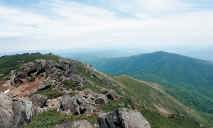 |
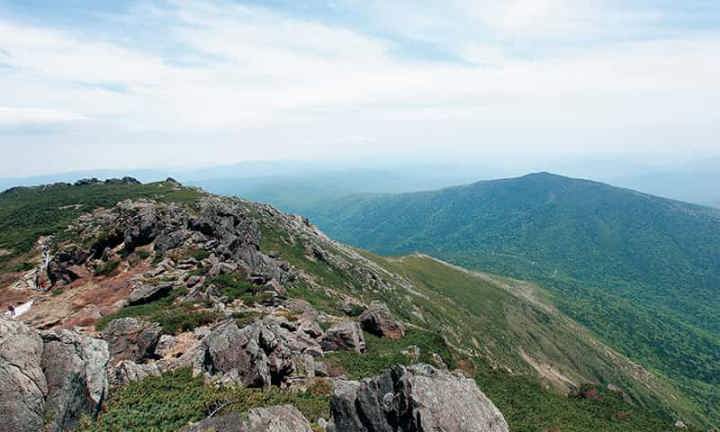
1917 meters above sea level, one of the mountains known as the "Three
Mountains of Tono." The summit is the border between Tono City, Hanamaki
City, and Miyako City. It has been known as a mountain of ancient worship.
There are many alpine plants endemic to the mountain, making it a dream
destination for alpine plant lovers. Most of the hiking trail is dabgerous
because rocky and has a lot of loose rocks. There are no toilets on the
hiking trail, so it's a good idea to bring a portable toilet. Within this
area, capturing or collecting wild animals and plants, cutting down timber,
and collecting minerals, earth and stone are prohibited. There are Hayachine
Shrine at the summit and at the foot of the mountain. BTW, don't forget
that here is a bear habitat!
(external link) |
TONO(City),
HANAMAKI(City),
MIYAKO(City) |
|
|
|
|
|
| Museum of TONO's Tale |
falktale museum |
34C011 |
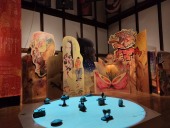 |
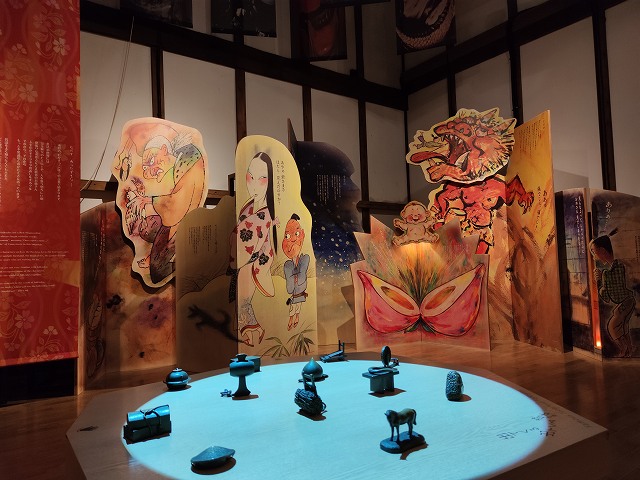
Tono is known as a town of folk tales, and the legends passed down in the
area became widely known throughout Japan when they were published by one
of famouse folklorist, Kunio Yanagita as "The Tales of Tono."
Tono Monogatari no Yakata (Tono Folktale Museum) is a facility that contributes
to revitalizing the area and promoting tourism by collecting, storing,
and exhibiting materials related to the region's folk tales and the background
to their creation, as well as the history, culture, and folklore of the
castle town. Through various exhibits and videos, and through folk tales
told by storytellers, visitors of all ages can experience the legends passed
down in Tono.
(external link) |
TONO(City) |
|
|
|
|
|
| Waterwheel at YAMAGUCHI |
only waterwheel working now here |
34C012 |
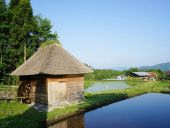 |
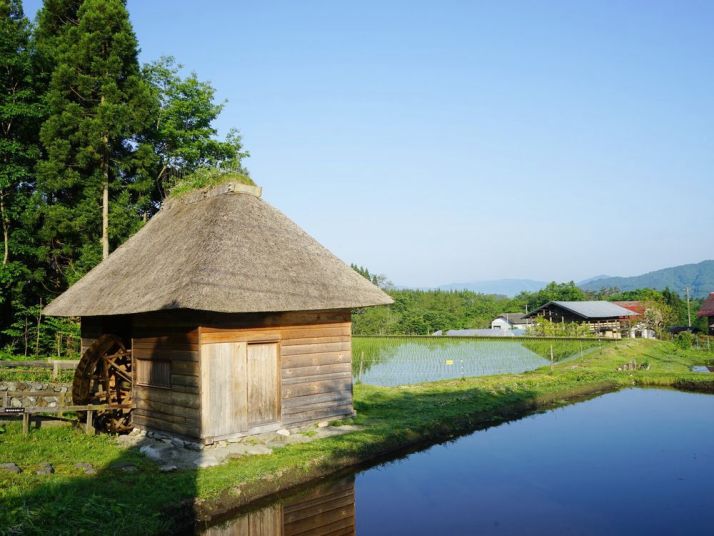
This thatched-roof old waterwheel is located in the Yamaguchi district, which is an impressive part of Tono's tranquil rural scenery, with mountains and rice fields stretching out in the background. Waterwheels are used for threshing and milling, and there used to be several waterwheels in the area, but with the advancement of mechanization in agriculture, the Yamaguchi waterwheel is the only one that remains today. It is still in use today, and you can tour the interior. As you approach the watermill, the powerful sounds of the wheel turning and the water flowing jump into your ears. With the grinding of the gears of the waterwheel and the splashing water, the waterwheel is a sturdy and powerful sight that combines the power of nature and the wisdom of life.
(external link) |
TONO(City) |
|
|
|
|
|
| Historical Streetscape |
SAMURAI quarters |
34C013 |
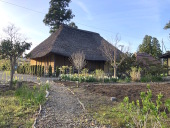 |
Traditional Buildings named "Kanegasakicho Castle Suwa-koji (Samurai
residence area remaining in castle town)" stretches approximately
690meters from east to west and 980meters from north to south, and is surrounded
by rich nature including rivers and tree belts. It is thought to have been
developed in 1644 , with the fortress facing the Kitakami River, samurai
estates between the fortress and the road to the west of the fortress,
and townspeople's areas along the road. The alleys within the samurai town
remain almost exactly as they were in the Edo period, and traditional buildings
such as samurai houses with thatched roofs are well preserved. Each site
is divided into sections by hedges and stonework facing the road, and a
variety of trees are planted within the sites.
(external link) |
KANEGASAKI(Town) |
|
|
|
|
|
| Golden Hall of CHUSONJI Temple |
one of world cultural heritage |
34C014 |
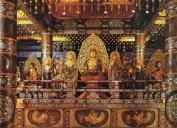 |
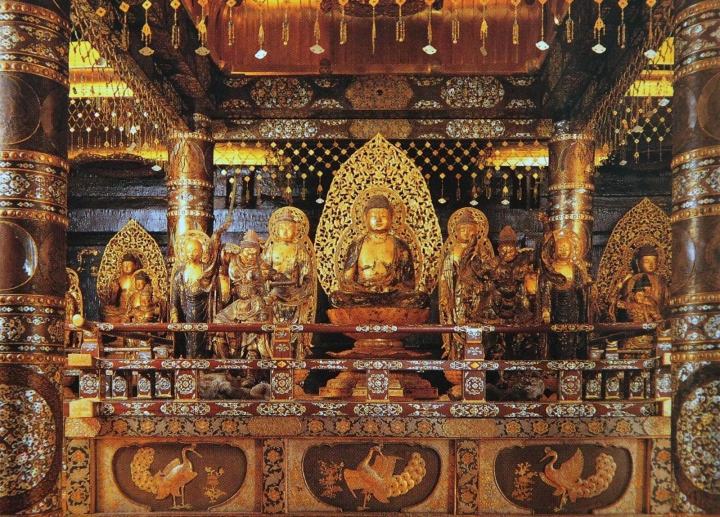
Chusonji Temple is said to have been founded in 850, but it is believed
that it was first built in the early 12th century when Fujiwara Kiyohira,
the first head of the Oshu Fujiwara clan. The inscription on the ridgepole
of the existing Konjikido (Golden Hall) dates it to 1124. The hall was
built by Kiyohira as his own mausoleum, and the mummified remains of three
generations of Kiyohira, his son Motohira, and his grandson Hidehira are
enshrined on a stepped platform inside. The peaceful and prosperous golden
culture of Hiraizumi continued for 100 years, through three generations
of Kiyohira, his son Motohira, and his grandson Hidehira. Although it was
destroyed during the Oshu conquest by the Kamakura shogunate, the gardens
and golden pagoda, built based on Pure Land Buddhism with the aim of consoling
the souls of those who died and realizing peace, still retain the appearance
of that time.
(external link) |
HIRAIZUMI(Town) |
|
|
|
|
|
|
|
|
|
|
|
|
|
| |
|
|
|
| other contents |
|
|
Medical Tourism
|
|
|
| Japan - the country of advanced medical care! |
 |
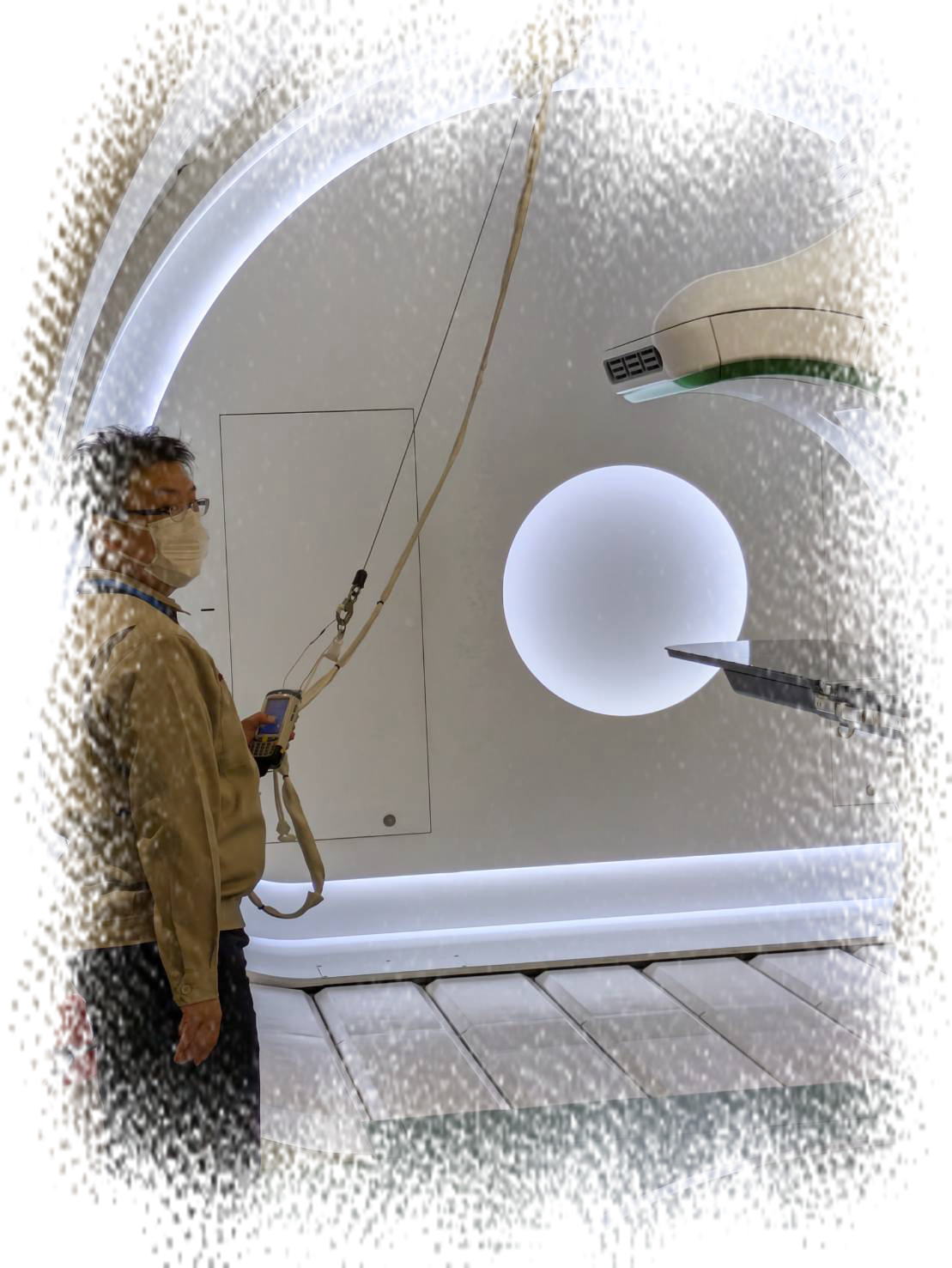
| Cancer can be cured without surgery |
|
|
|
Properties' Research-Purchase Tourism
|
|
|
| Japan - stable politics and public safety! |
|
| Perfect for living or investing |
|
|
| |
|
| |
|
ACCOMMODATION - HOTEL, RYOKAN (Traditional Japanese Inn)
|
|
|
|
|
| |
|
| |
| |
|
|
Trips abroad for Japanese Travelers
|
|
|
| a custom-made trip is the one you won't regret |
|
|
|
|
shop - the TOHOKU PRIDE
|
|
|
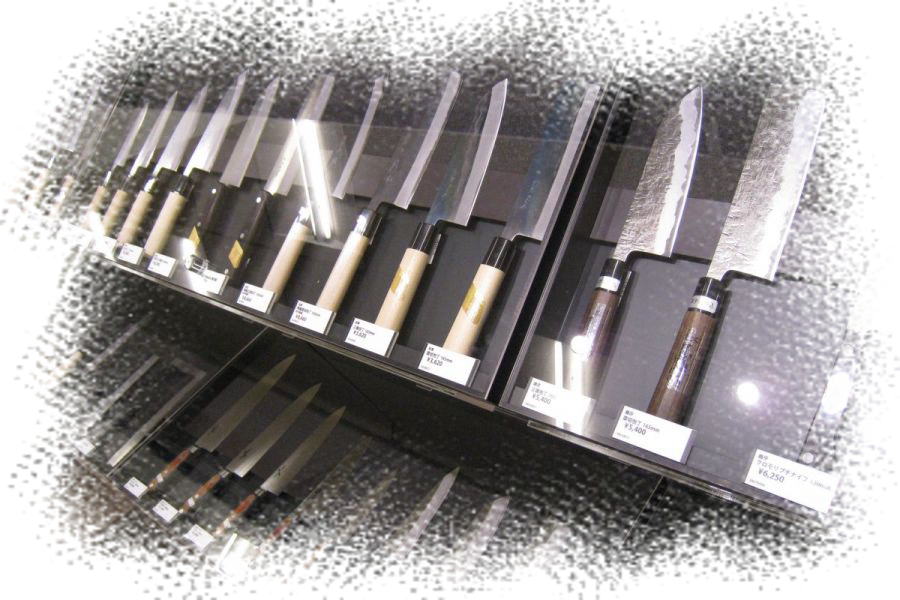
| You can purchase Japanese masterpieces |
|
|
|
| |
|
|
| Discover something in Japan! |
| TRAVELMART® is not only a travel business, but also can offer clients valuable
experiences in Japan by its wealthy network and know-how, as ... |
| Medical care, Real estate (purchase, investment, management), Purchase
Japaese masterpieces, Relocation to Japan and Establishing a company or
shop, others |
|
| Copyright... IMA Group Co., Ltd. (Wholesaler and Travel Agency in Japan
since 1985) |
| <about link> these web pages are always Link Free. You can feel free to create link to every pages.
|
|
|